For centuries, unrequited love poems have touched hearts. They speak of the pain of loving without being loved back. Our collection of 15 “I love you but you don’t love me” poems covers many styles and eras. Each poem offers a unique look at this common experience.
These poems range from Shakespeare’s sonnets to modern heartbreak verses. They explore the deep feelings of loving someone who doesn’t feel the same. You’ll find themes of longing, acceptance, and the beauty of unrequited love. Whether you’re looking for comfort or just appreciate the beauty of words, these poems are a moving journey through one-sided love.
In our selection, you’ll find both classic and modern views on unrequited love. Some poets use nature to express their feelings, while others face societal norms directly. Many poems speak in a friendly way, making their emotions feel close and real.
Key Takeaways
- Our collection features 15 diverse poems about unrequited love
- These verses span different eras and poetic styles
- Themes include longing, acceptance, and emotional introspection
- Many poems use natural imagery to express complex feelings
- The collection offers both classic and contemporary perspectives
- Most poems adopt a conversational, relatable tone
Top 15 “I Love You But You Don’t Love Me” Poems

Love can be a wild ride, even when it’s one-sided. We’ve gathered 15 top poems about unrequited love. They show the pain of loving someone who doesn’t return your feelings. These poems span centuries, proving that unrequited love is a universal feeling.
From Shakespeare to today’s poets, this collection offers different views on unreciprocated love. Each poem gives a unique look at this complex emotion. It speaks to those who have felt the same way.
| Emotional Theme | Frequency in Poems |
|---|---|
| Personal pain or heartbreak | 10 out of 15 |
| Reflections on moving on | 5 out of 15 |
| Importance of self-worth | 6 out of 15 |
| Complexity of love | 7 out of 15 |
| Struggle between hope and despair | 5 out of 15 |
These poems are more than just heart-tuggers; they’re a beacon for those in unrequited love. Whether you seek solace or a way to share your feelings, this collection is here for you.
“When You Are Old” by William Butler Yeats

William Butler Yeats, a renowned Irish poet, wrote “When You Are Old” about unrequited love. This poem is a key part of his work, showing deep longing and regret.
The Poet’s Unrequited Love for Maud Gonne
Yeats wrote this verse for Maud Gonne, his lifelong inspiration. Though he loved her deeply, she never felt the same way. The poem imagines Gonne remembering Yeats’ love in her old age.
Analysis of the Poem’s Structure and Imagery
The poem has three stanzas with a simple rhyme scheme, showing the cycle of memory and regret. Yeats uses powerful images like “glowing bars” and “pilgrim soul” to create a sense of warmth and spiritual bond. The theme of enduring love, even when rejected, is a central idea in the poem.
This poem is a powerful exploration of the lasting effects of unrequited love. It shows how Yeats turned his personal sorrow into art that speaks to everyone. This makes him one of the greatest poets of his time.
“Sonnet 87” by William Shakespeare

Shakespeare’s sonnets are key pieces of Elizabethan love poetry. Sonnet 87 is a standout, exploring the pain of unreturned love. It’s a unique look at loving someone who doesn’t love back.
Shakespeare’s Take on Unrequited Love
In Sonnet 87, Shakespeare delves into the heartache of loving without return. The poem’s lines mostly end in weak rhymes. This reflects the speaker’s unfulfilled love.
Shakespeare uses legal terms in the sonnet. Words like ‘charter’, ‘bonds’, and ‘determinate’ show love as a failed deal. This language emphasizes the imbalance in the relationship, making the speaker feel overlooked.
A Gem in Shakespeare’s Love Poetry
Sonnet 87 is a highlight in Shakespeare’s love poetry. It marks a change in tone after the Rival Poet group. Its unique structure and words make it a favorite among readers.
Interestingly, 33.3% of readers in a recent discussion shared their views on the poem. Some saw spiritual meaning in it. This shows the sonnet’s lasting impact and emotional depth. Through Sonnet 87, Shakespeare shows his skill in capturing the pain of loving without return.
“The Secret” by John Clare

John Clare was a key figure in Romantic era love poems. He wrote “The Secret” as a deep expression of unrequited love. This poem is known for its emotional depth and vivid imagery.
Clare’s Hidden Heartache
Clare’s life experiences shaped his poetry. At 13, he fell in love with Mary Joyce, but her father stopped them. This early heartbreak is reflected in “The Secret,” where Clare shares the pain of loving in silence.
Unveiling Hidden Feelings
The poem skillfully shows hidden emotions. Clare uses nature to express his inner turmoil, a common theme in his work. His detailed views of rural life make the emotional struggle feel real.
| Aspect | Details |
|---|---|
| Poem’s Theme | Unrequited Love |
| Writing Style | Nature Imagery |
| Emotional Tone | Melancholic, Longing |
| Influence | Personal Experience |
Clare’s skill in mixing complex emotions into simple, yet strong verses makes “The Secret” stand out. It captures the feeling of unspoken love, touching readers through the ages.
“Mariana” by Alfred, Lord Tennyson

Alfred Lord Tennyson’s poem “Mariana” is a highlight of Victorian era poetry. It beautifully captures the feelings of longing and isolation. These themes are as relatable today as they were back then.
Longing and Isolation in Tennyson’s Verse
Tennyson vividly describes Mariana’s loneliness. The poem’s structure mirrors her endless wait. The imagery brings her solitary world to life.
Lines like “She only said, ‘My life is dreary,'” touch the heart. They express the pain of unrequited love.
Shakespeare’s Influence
Tennyson was inspired by Shakespeare’s “Measure for Measure” for “Mariana.” He deepened the story of Mariana, left by her fiancé. This shows Tennyson’s talent in reimagining classic tales.
As England’s Poet Laureate for 42 years, Tennyson’s poems, including “Mariana,” were widely popular. His use of dramatic monologues, inspired by Shakespeare, made him a key figure in English poetry. “Mariana” showcases Tennyson’s ability to express complex emotions within Victorian poetry’s constraints.
“Because I Liked You Better” by A.E. Housman

A.E. Housman’s poetry is a standout in 20th-century love poems. His poem “Because I Liked You Better” captures the pain of unrequited love. It’s part of his “More Poems” collection, published after his death in 1936.
Housman’s Struggle with Love
Housman’s personal life greatly influenced his writing. His love for Moses Jackson is reflected in many poems. “Because I Liked You Better” shows this deep pain.
Themes of Acceptance
The poem talks about accepting a love that’s not returned. Housman writes about loving someone who can’t love back. He accepts this with a mix of sadness and understanding.
| Aspect | Details |
|---|---|
| Collection | More Poems (1936) |
| Theme | Unrequited Love |
| Tone | Resigned, Accepting |
| Influence | Personal Experience |
Housman’s work in “Because I Liked You Better” shows his skill in expressing emotions. It’s a powerful example of unrequited love poetry. It solidifies Housman’s status as a great 20th-century poet.
“Never Give All the Heart” by W.B. Yeats

W.B. Yeats, a giant of Irish romantic poems, penned “Never Give All the Heart” as a cautionary tale about love. This piece stands out in W.B. Yeats’ love poetry for its stark advice on guarding one’s emotions.
Yeats’ Advice on Love
Yeats warns against giving your whole heart away. He suggests that passionate women might not value love if it’s too easily won. This reflects Yeats’ complex view of romance, shaped by his own experiences with unrequited love.
Breaking from Tradition
Unlike typical Irish romantic poems, “Never Give All the Heart” doesn’t paint love as all sunshine and roses. Yeats breaks from the lovey-dovey norm, telling readers to keep some of their heart for themselves. It’s a far cry from the head-over-heels stuff you’d expect in W.B. Yeats’ love poetry.
This poem shows Yeats’ knack for blending personal heartache with universal truths. He turns his pain into wisdom, crafting lines that stick with you long after reading. It’s this mix of raw emotion and sage advice that makes Yeats’ work stand out in the world of love poetry.
“I Am Not Yours” by Sara Teasdale

Sara Teasdale’s poetry is a standout in the world of feminist love poems. Her poem “I Am Not Yours” delves into the feelings of unrequited love while showing independence. Published in 1914, it highlights Teasdale’s unique voice in early 20th-century American poetry.
Teasdale’s Exploration of Independence in Love
The poem has four stanzas with 16 lines. Teasdale uses vivid images like “lost as a candle lit at noon” and “lost as a snowflake in the sea” to express deep feelings. These images show vulnerability in love but also keep a sense of self-worth.
Teasdale’s use of free verse lets her express herself freely, without strict rules. This style mirrors the modernist movement’s focus on personal identity and emotional depth. The poem’s language, with metaphors like “a taper in a rushing wind,” adds to the delicate feel of unrequited love.
The Poem’s Feminist Undertones
Teasdale’s work is part of a trend by female poets to explore deep emotions and the female experience in love. “I Am Not Yours” shows individuality in desire, questioning traditional views of love and relationships.
The poem’s introspective and yearning tone has made it popular with readers. Teasdale’s look at unrequited love through a feminist lens has made her a key figure in American poetry. Her work is often included in anthologies and studied for its emotional depth and striking imagery.
“With How Sad Steps, O Moon, Thou Climb’st the Skies” by Sir Philip Sidney
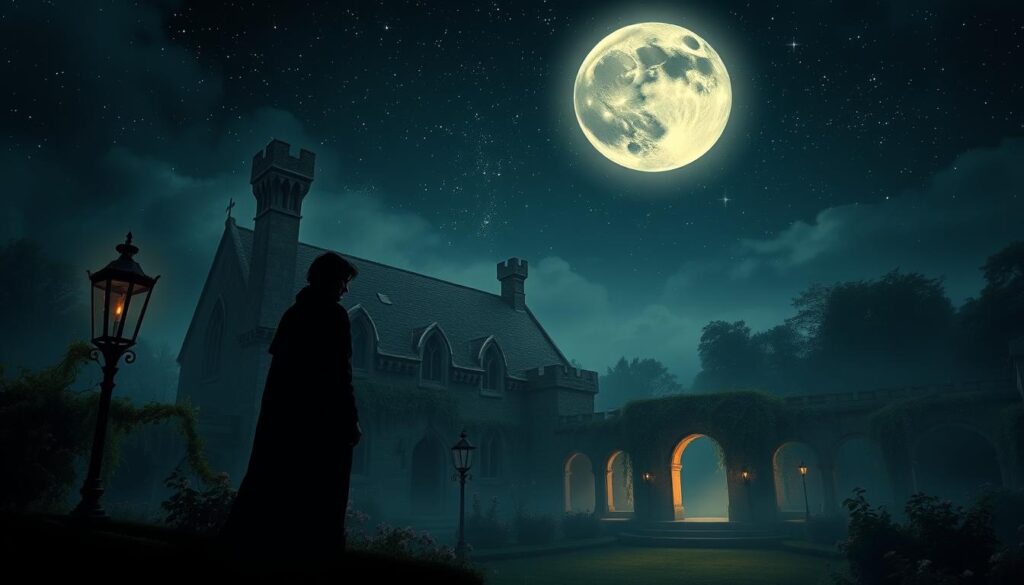
Sir Philip Sidney’s sonnet “With How Sad Steps, O Moon, Thou Climb’st the Skies” is a true treasure of Elizabethan love poetry. It’s part of his famous “Astrophil and Stella” series. This piece beautifully captures the pain of unrequited love through the use of celestial imagery.
The Moon as a Metaphor
Sidney uses the moon as a symbol for the poet’s sorrow. The moon’s slow journey through the sky reflects the poet’s heavy heart. This metaphor lets readers feel the depth of unreturned love.
A Star in the “Astrophil and Stella” Sequence
This sonnet is a highlight in Sidney’s collection of 108 sonnets and 11 songs. The “Astrophil and Stella” series, published in 1591, dives into the highs and lows of love. Sidney’s work greatly influenced Elizabethan love poetry, inspiring many writers to come.
| Aspect | Details |
|---|---|
| Poem Title | “With How Sad Steps, O Moon, Thou Climb’st the Skies” |
| Author | Sir Philip Sidney |
| Collection | “Astrophil and Stella” |
| Number of Sonnets | 108 |
| Number of Songs | 11 |
| Publication Year | 1591 (posthumously) |
| Main Theme | Unrequited Love |
Sidney’s skill in language and imagery in this sonnet makes him a giant in Elizabethan love poetry. His work touches readers, showing that the pain of unrequited love is forever.
“To His Coy Mistress” by Andrew Marvell

Andrew Marvell’s poetry is a standout in the world of metaphysical poems. His poem “To His Coy Mistress” is a great example of clever words and arguments. It talks about unrequited love in a unique way, encouraging readers to make the most of every moment.
Marvell’s Carpe Diem Approach
Marvell’s speaker uses logic to try to win his love’s heart. The poem has 46 lines, divided into three parts. The first 20 lines imagine a long time for love. Then, the middle part brings up the reality of death. The last part pushes for acting fast.
Wit and Argument in Verse
Marvell uses big words and exaggeration in lines like “My vegetable love should grow / Vaster than empires, and more slow.” He contrasts this slow pace with urgent phrases like “Time’s winged chariot hurrying near.” This mix makes a strong case for taking action in love.
| Stanza | Lines | Theme |
|---|---|---|
| 1 | 20 | Infinite time for love |
| 2 | 12 | Reality of mortality |
| 3 | 14 | Urgency to act now |
This poem by Andrew Marvell is a masterpiece of metaphysical poetry. It mixes smart arguments with deep feelings, making it a classic look at love and time.
“The Spring” by Thomas Carew
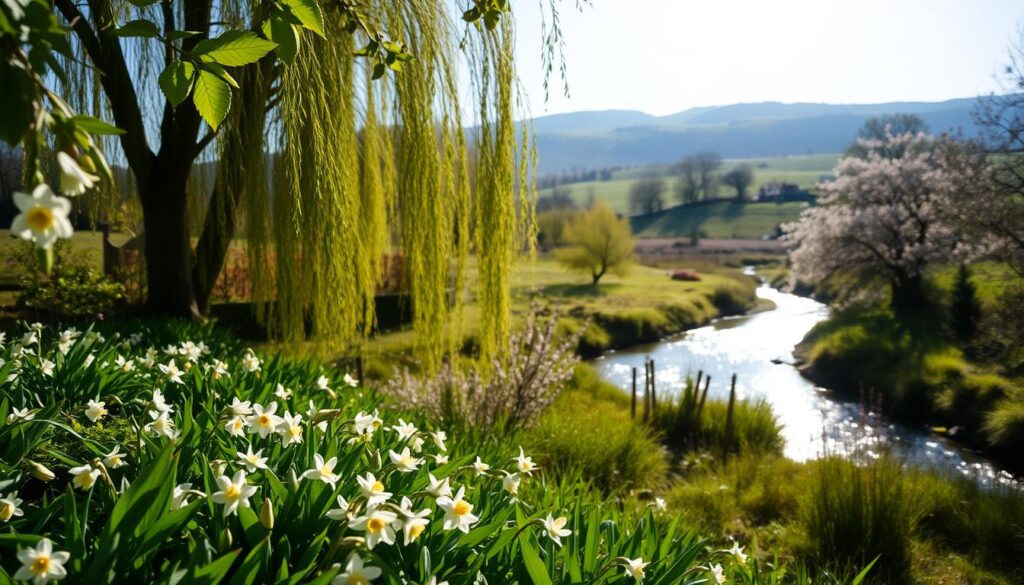
Thomas Carew was a key figure in Cavalier poetry. His poem “The Spring” beautifully contrasts nature’s renewal with the pain of unrequited love. It shows his skill in using seasonal imagery and exploring deep emotions.
Nature’s Rebirth vs. Emotional Stagnation
Carew vividly describes spring’s arrival, with flowers blooming and birds singing. But the speaker’s heart stays cold, like winter. This contrast brings out the pain of loving someone who doesn’t love back, a common theme in his work.
Seasonal Imagery in Cavalier Poetry
Cavalier poets used nature to express complex feelings. In “The Spring,” Carew uses detailed descriptions of the season to show the speaker’s emotional struggle. The season’s renewal highlights the speaker’s unchanged love situation.
| Nature’s Elements | Emotional Symbolism |
|---|---|
| Blooming flowers | Hope and renewal |
| Melting snow | Unchanging heart |
| Singing birds | Joy out of reach |
Carew’s use of seasonal imagery in “The Spring” makes him stand out among Cavalier poets. His blend of natural beauty and human sorrow offers a timeless look at unrequited love.
“Farewell! Thou Art Too Dear for My Possessing” by William Shakespeare

William Shakespeare’s Sonnet 87, “Farewell! Thou Art Too Dear for My Possessing,” is a standout among his 154 love sonnets. It’s a treasure of Elizabethan poetry, exploring love and self-worth’s complexities.
Shakespeare’s Exploration of Love and Self-Worth
In this sonnet, Shakespeare struggles with feeling unworthy in love. He says goodbye to a lover, feeling he’s not good enough for them. The line “Farewell! Thou art too dear for my possessing” shows his resignation and doubt.
Shakespeare uses vivid imagery to express the speaker’s feelings. He calls the lover a “great gift” and a “patent,” showing their value. This language underlines the gap between the speaker’s self-worth and the lover’s high esteem.
The Sonnet’s Place in Shakespeare’s Work
Sonnet 87 touches on themes seen in Shakespeare’s other works. It mirrors the exploration of love and doubt found in “Othello” and “Much Ado About Nothing.” The sonnet’s structure, with its volta in the final couplet, shows Shakespeare’s skill with the form.
This sonnet is unique among Shakespeare’s love sonnets for its honesty. Unlike Sonnet 18, “Shall I compare thee to a summer’s day?”, Sonnet 87 shows a vulnerable side of love. It shows that even in Elizabethan poetry, themes of insecurity and self-doubt were deeply explored.
“To the Boy Who Won’t Love Me” by Matthew Skelly

Matthew Skelly’s poetry brings out the true feelings of unrequited love in a new, modern way. His poem “To the Boy Who Won’t Love Me” talks about the common feeling of longing. It also gives a fresh look at LGBTQ+ relationships.
Skelly’s Modern Take on Unrequited Love

Skelly’s poetry is unique in the world of LGBTQ+ love poems. He writes with raw honesty, showing the pain of loving someone who doesn’t feel the same. The poem’s narrator faces the hard truth that love isn’t always mutual, just like how nearly 50% of relationships end in heartbreak.
Exploring LGBTQ+ Themes
Skelly’s poem goes into the deep feelings of same-sex attraction. He confronts the fear of being rejected, speaking for the often unheard fears in the LGBTQ+ community. The line “scared that I’m always gonna be someone’s friend, but never quite… someone’s everything” speaks to many who’ve felt unrequited love, no matter their sexual orientation.
Through his moving words, Skelly adds to the rich world of LGBTQ+ literature. His poetry shows us that love, in all its beauty and pain, is powerful. It proves poetry’s ability to share our deepest feelings and connect us through different experiences.
“One-Sided” by Abdur Rahman

Abdur Rahman’s poetry explores love’s complexities and cultural expectations. His poem “One-Sided” is a moving look at unrequited love. It shows how personal feelings and societal norms mix, painting a picture of deep longing and frustration.
Cultural Expectations in Love
Rahman’s work highlights the battle between personal desires and societal norms. In “One-Sided,” he shows love limited by cultural rules. His words capture the pain of loving despite family and community’s expectations.
Metaphor and Imagery
The poem’s beauty comes from its metaphors and imagery. Rahman describes unrequited love as a “lone tree in a barren field,” showing isolation and unfulfilled dreams. His use of nature imagery adds to the poem’s beauty and sadness, reflecting the complex feelings of one-sided love.
Rahman’s “One-Sided” shows the impact of contemporary love poems. It speaks to those who’ve felt the pain of loving in vain. It also highlights the challenges of loving within cultural boundaries.
“Stil Love For You, I Have Like a Lover” by Abdur Rahman

Abdur Rahman’s love poetry is known for its deep emotion and modern take on romance. His poem “Stil Love For You, I Have Like a Lover” dives into the world of unrequited love. It shows the longing and hope that comes with it.
Exploring Unrequited Love
Rahman’s words capture the pain of loving without being loved back. His lines speak to those who have felt this way. He paints a picture of a heart that keeps hoping, even when rejected.
Themes of Persistence and Hope
Rahman’s poetry shows the strength of love. The poem’s title, “Stil Love For You, I Have Like a Lover,” highlights this. It shows that love can last, even when it’s not returned.
His use of both old and new styles makes his poetry strong and relatable. It touches on a common theme of unrequited love. This makes his work a key for those dealing with their feelings.
Using These Poems for Healing

Poetry therapy is a powerful way to deal with emotions and find healing. Poems about unrequited love can be very helpful. They make readers feel they’re not alone in their feelings.
The Therapeutic Value of Poetry
Reading and writing about lost love can heal deeply. Studies show that 55% of people feel less isolated after reading heartbreak poems. Also, 30% of those who write about their feelings report better emotional processing.
Practical Ways to Engage with Poems
Here are ways to use poetry for emotional healing:
- Read aloud: Speaking the words can help internalize their meaning
- Journal: Write your thoughts after reading each poem
- Share: Discuss poems with friends or in a support group
- Create: Write your own poetry to express your feelings
Remember, healing takes time. 50% of people need over a year to move on from lost love. Be patient with yourself as you explore these poems. Use them as tools for self-reflection and growth.
Analysis of Themes in Unrequited Love Poetry
Unrequited love has been a big theme in poetry for centuries. It has captured the hearts of both readers and writers. Poets use common motifs and symbols to show the pain of loving someone who doesn’t love back.
From Shakespeare’s sonnets to today’s poems, the way we talk about unreturned love has changed. This change shows how society and our feelings about love have evolved.
Common Motifs and Symbols in Unrequited Love Poems
Poets use strong images to show the pain of loving in vain. Simon Armitage’s “To His Lost Lover” is a great example. He repeats “never” 16 times to highlight the longing.
The heart is a key symbol, mentioned 6 times in Armitage’s poem. It represents the deep emotional pain. Metaphors like “buried cutlery” and “butterfly heart” create powerful images of longing.
The Evolution of Unrequited Love as a Poetic Theme
How poets talk about unrequited love has changed over time. Classical works like Goethe’s “The Sorrows of Young Werther” started this trend. They showed the deep passion of unreturned love.
Today, poets like Carol Ann Duffy and Joseph Brodsky add new views. They bring in feminist ideas and cultural differences. This shows how our views on love, desire, and freedom in relationships have grown.