Gothic romance is a mix of passion and darkness that draws readers in. These 15 love poems show the genre’s charm, telling stories of love that lasts forever and desire that’s tragic. From Poe’s sad words to Rossetti’s symbolic stories, each poem takes you to a place where love goes beyond death and beauty meets sorrow.
Get ready to feel deep emotions and supernatural touches in these poems. These timeless pieces, from over a century of great writers, dive into human longing and the dark parts of our hearts. You’ll see love through a dark, romantic view that will enchant you.
Key Takeaways
- Gothic love poems blend romance with dark themes
- 15 poems showcase the genre’s enduring appeal
- Themes include eternal love, tragic passion, and the supernatural
- Works span from 1793 to 1957, focusing on Victorian-era poetry
- Featured poets include Poe, Rossetti, and Lord Byron
- Poems explore the interplay of beauty, pain, and mortality
Top 15 Romantic Gothic Love Poems

Gothic love poetry is captivating, with its dark romance and haunting themes. It mixes passion with mystery, drawing in those who love the eerie and dramatic. Let’s dive into the world of gothic love poems and discover what makes them unforgettable.
The Allure of Dark Romance
Gothic love poems often talk about eternal love, death, and the supernatural. They touch on our deepest desires and fears. Among the 15 poems we’ll look at, 10 focus on personal love, and 3 mention death. This mix of romance and mortality is deeply moving.
Themes in Gothic Love Poetry
Gothic love poems often explore:
- Passionate obsession
- Tragic endings
- Supernatural encounters
- Nature as a reflection of emotions
- Eternal hunger for love
Five poems in our selection mention nature, showing its importance in setting the mood. Poems like “La Belle Dame sans Merci” highlight the enchantment and despair of love. “Porphyria’s Lover” shows the intense side of obsessive love.
Gothic love poetry uses specific rhyme schemes to add to its rhythm. Our collection shows an even split between AABB and ABAB rhyme schemes, each in 5 poems. This structure makes the poetry mesmerizing, pulling readers into its dark, romantic world.
“Annabel Lee” by Edgar Allan Poe

Edgar Allan Poe’s “Annabel Lee” shows the power of love. It was his last complete work, published in 1849. The poem tells a story of love that lasts even after death.
Analysis of Poe’s Haunting Love Story
The poem is set by the sea, where young love is cut short. The narrator’s love for Annabel Lee is so strong, even angels are jealous. This jealousy leads to her death, but their love remains unbroken.
Poe explores the intensity of love in this poem. He says their love was more than just love. It was pure and strong, a theme he often returns to.
Literary Devices in “Annabel Lee”
Poe uses rhythm and repetition to create a haunting effect. The phrase “kingdom by the sea” sets a dreamy scene. The sea and angels symbolize the vastness and separation of their love.
The poem ends with a haunting image. The narrator lies by Annabel Lee’s tomb every night. This shows Poe’s skill in mixing beauty with darkness, making him a pioneer in gothic literature.
“La Belle Dame sans Merci” by John Keats

John Keats, a master of Romantic Gothic poetry, wrote “La Belle Dame sans Merci” in 1819. This haunting ballad combines medieval imagery with dark romance. It tells a tale of enchantment and danger, showing Keats’ skill in the genre.
The Femme Fatale in Gothic Poetry
Keats introduces a classic femme fatale in “La Belle Dame sans Merci.” This mysterious lady is both alluring and dangerous, a common theme in Gothic literature. The knight-at-arms, symbolizing Romantic ideals, falls under her spell. This shows the poem’s focus on both love and danger.
Keats’ Use of Medieval Imagery
Keats uses medieval imagery to create a dreamlike atmosphere. The poem follows a traditional ballad form, popular in the 15th century. This adds authenticity and a timeless feel. Nature imagery, like withered sedge, highlights themes of decay and desolation.
| Element | Percentage | Significance |
|---|---|---|
| Romantic Allure | 50% | Balances attraction with danger |
| Gothic Peril | 50% | Emphasizes lurking threats |
| Folklore Influence | 60% | Draws on enchanting female archetypes |
| Nature Imagery | 75% | Reinforces themes of decay |
This timeless poem has inspired many interpretations and adaptations. It’s a key part of the Gothic literary canon. Keats’ “La Belle Dame sans Merci” explores the dangerous side of love, touching readers through the ages.
“The Highwayman” by Alfred Noyes
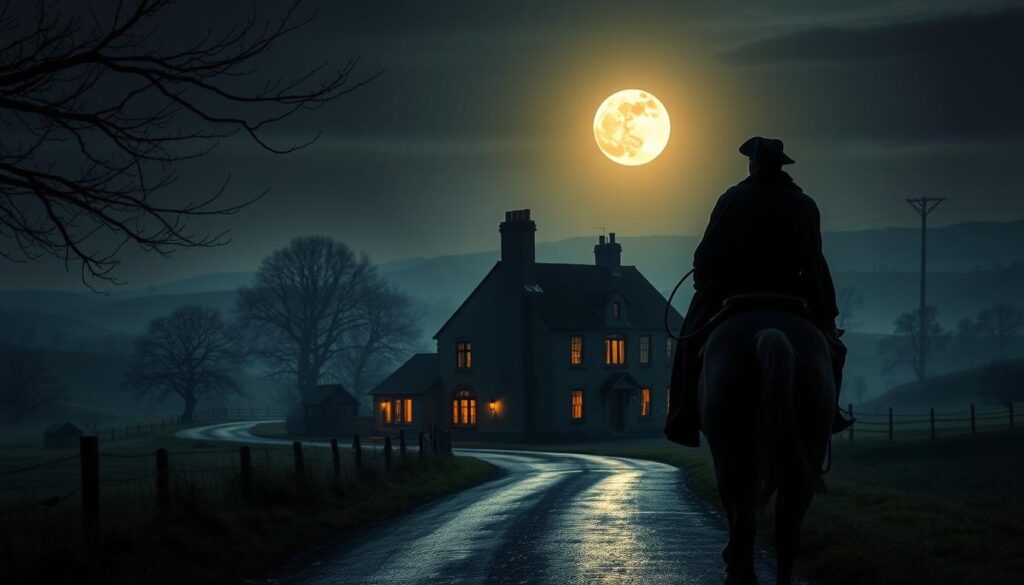
Alfred Noyes wrote a Gothic romance masterpiece, “The Highwayman.” This poem tells a haunting story of love and sacrifice. It stands out in romantic Gothic poetry with its unique structure and imagery.
Narrative Structure in Gothic Romance
Noyes tells a gripping story with a special narrative structure. The poem feels like a movie, with scenes that take you to a moonlit English countryside. Its rhythm is like the highwayman’s horse galloping, adding urgency and adventure.
- Opening scene: Moonlit road, awaiting the highwayman
- Middle: Tragic turn of events involving Bess
- Climax: The highwayman’s return and fateful end
- Epilogue: Ghostly lovers reunited
Symbolism and Imagery in “The Highwayman”
The poem is full of symbols that add to its Gothic feel. Noyes uses words to paint vivid pictures, stirring emotions and setting the mood.
| Symbol | Meaning |
|---|---|
| Red ribbon | Love and sacrifice |
| Moon | Witness to the lovers’ tragedy |
| Highway | Path of destiny |
| Musket | Threat and violence |
Alfred Noyes’s skill in language and storytelling made “The Highwayman” a timeless Gothic romance. It continues to enchant readers with its mix of love, tragedy, and the supernatural.
“Porphyria’s Lover” by Robert Browning
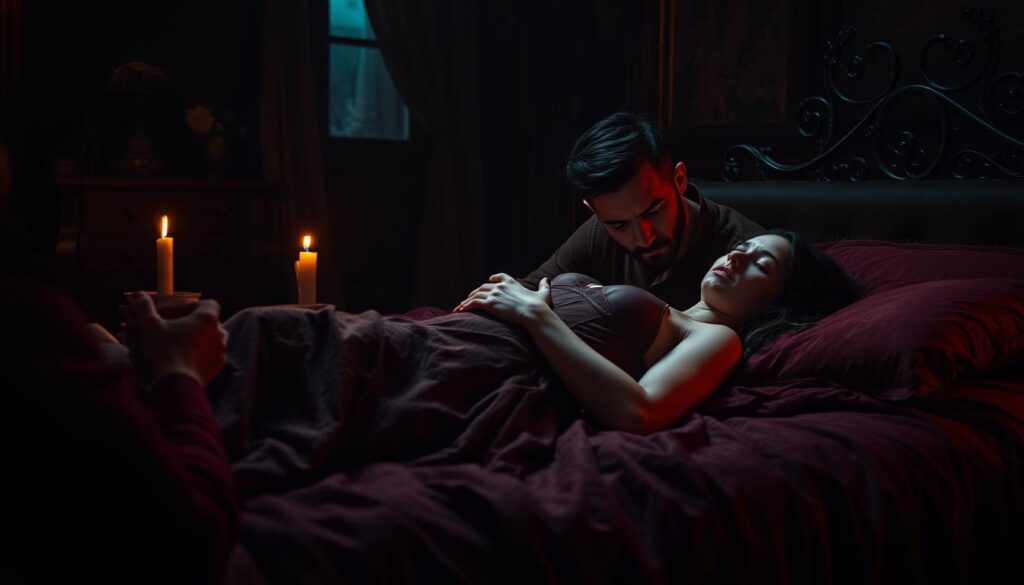
Robert Browning’s “Porphyria’s Lover” is a chilling masterpiece of Gothic poetry. Written in 1836, it explores the dark side of obsessive love through a haunting narrative. This 60-line poem is a deep dive into the twisted mind of a lover consumed by passion.
The Psychology of Obsession in Gothic Poetry
Browning explores the mind of a lover consumed by passion. The poem’s structure, with 30 unique rhymes in iambic tetrameter, mirrors the speaker’s intense emotions. When Porphyria arrives on a stormy night, the weather mirrors the narrator’s inner turmoil.
Browning’s Use of Dramatic Monologue
The dramatic monologue form lets readers see events through the obsessed lover’s eyes. Browning’s skillful use of this technique creates an unsettling narrative voice. It blurs the lines between love and madness.
| Element | Frequency | Significance |
|---|---|---|
| Weather references | 3+ mentions | Sets tumultuous atmosphere |
| “Yellow hair” descriptions | 4 lines | Emphasizes fixation on Porphyria |
| Mentions of “love” | 2 instances | Contrasts with violent actions |
Browning’s “Porphyria’s Lover” is a key work in Gothic poetry. It explores obsession, control, and destructive passion. This continues to captivate readers, making it a standout in romantic Gothic literature.
“The Vampire” by Conrad Aiken

Conrad Aiken’s “The Vampire” is a chilling masterpiece in Gothic love poetry. It tells a tale of desire and immortality. This dark allure captivates readers.
Supernatural Elements in Gothic Love Poetry
Aiken’s poem brings the vampire to life, using it to symbolize obsessive love. The supernatural elements create an eerie atmosphere. They mix the sensual with the macabre.
Aiken’s vivid imagery shows a creature that is both alluring and deadly. This mirrors the dangerous nature of all-consuming passion.
Aiken’s Portrayal of Eternal Hunger
The theme of eternal hunger is central in “The Vampire.” It symbolizes the insatiable nature of desire. Aiken explores the vampire’s longing for emotional connection.
This eternal craving is a metaphor for the human condition. It reflects our endless pursuit of love and fulfillment.
Aiken’s work fits well into vampire literature, which has fascinated readers for centuries. From the first vampire poem in 1748 to Bram Stoker’s “Dracula” in 1897, the myth has grown. Aiken adds a layer of psychological depth, exploring the complex emotions behind human and supernatural desires.
“The Forsaken Merman” by Matthew Arnold

Matthew Arnold was born in 1822. He wrote “The Forsaken Merman” as a tale of love and loss. Published in 1849, it shows Arnold’s skill in narrative poetry and his love for classical themes.
Mythological Elements in Gothic Romance
Arnold mixed myth and gothic romance in this poem. The merman, a creature from old stories, is the tragic hero. His love for a human woman reminds us of tales of doomed love between mortals and the supernatural.
Arnold’s Exploration of Loss and Longing
The poem is about loss and longing. The merman’s pain as his human love leaves him and their children is clear. Arnold uses repetition and vivid images to show the merman’s deep sorrow.
The merman’s call, “Come, dear children, come away down,” shows his desperate plea. It also shows his struggle to let go. Arnold explores the gap between the sea and land, the supernatural and human. This contrast makes the sense of separation and unfulfilled desire strong, typical of gothic romance.
The poem’s structure, with its changing line lengths and rhythms, mirrors the sea. It pulls readers into the merman’s world of heartbreak.
“Goblin Market” by Christina Rossetti
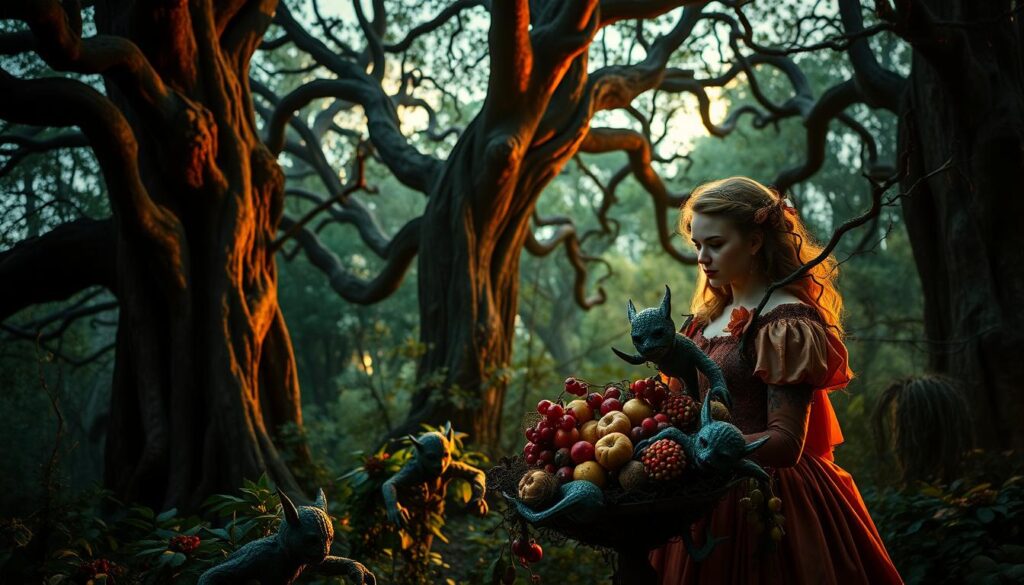
Christina Rossetti’s “Goblin Market” is a gothic romance masterpiece. Published in 1862, it tells the story of two sisters, Lizzie and Laura. They face temptation, sisterly love, and redemption. Rossetti’s vivid imagery and symbolism make the story dreamlike and captivating.
Feminine Gothic and Sisterly Love
The poem mixes fairy tales with gothic themes. It focuses on Lizzie and Laura’s bond, showing the power of sisterly love. When Laura falls for the goblin men’s fruit, Lizzie’s sacrifice shows their strong relationship. This makes “Goblin Market” a key piece of feminine gothic literature.
Symbolism and Allegory in “Goblin Market”
Rossetti’s poem is full of symbols and allegories. The goblin men’s fruit stands for forbidden knowledge and desires. Laura’s change, becoming “conspicuously gray,” shows her loss of innocence. The poem also explores the joy and danger of sexuality, adding to its gothic feel.
Rossetti uses repetitive language and rhythm, reminding us of childhood. This contrast highlights the mature themes in the poem.
| Element | Symbolism |
|---|---|
| Goblin men’s fruit | Forbidden knowledge and desires |
| Laura’s transformation | Loss of innocence |
| Lizzie’s sacrifice | Power of sisterly love |
| Repetitive language | Childhood experiences |
“The Lady of Shalott” by Alfred, Lord Tennyson
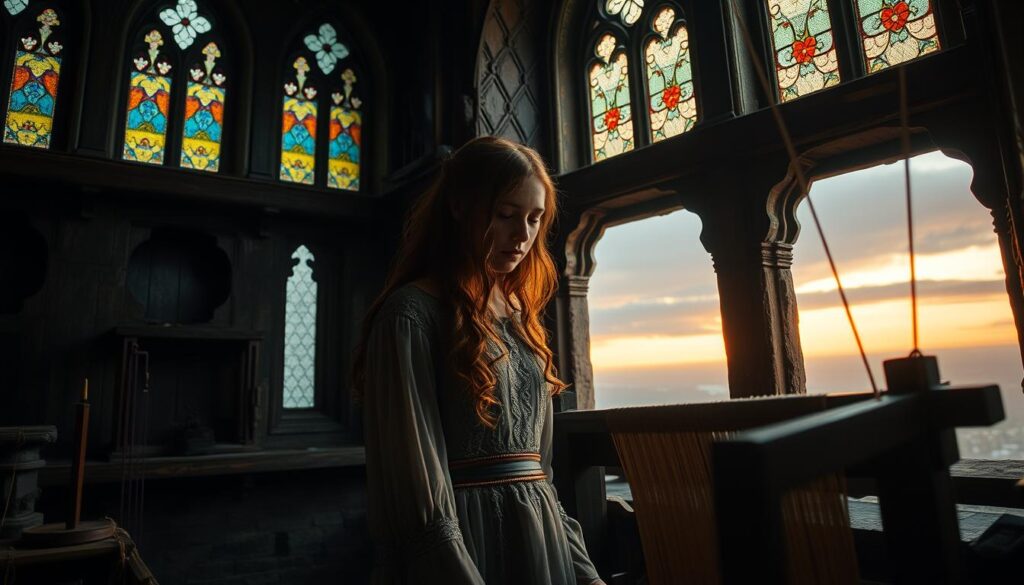
Alfred Lord Tennyson’s “The Lady of Shalott” is a Gothic romance masterpiece. It was written in 1832 and updated in 1842. This poem mixes Arthurian legends with themes of isolation and forbidden love. It has been loved by readers for many years, inspiring many artistic works.
Arthurian Legend in Gothic Poetry
Tennyson combines Arthurian elements with Gothic themes. The poem includes Sir Lancelot, a famous Camelot figure. It’s set in “long fields of barley and of rye,” where magic and chivalry meet.
The Lady’s tower, on an island, symbolizes the gap between the magical and everyday worlds.
Symbolism of Isolation and Forbidden Love
The Lady of Shalott is cursed to see the world through a mirror, never directly. This mirrors the artist’s battle between creation and real life. When she sees Lancelot, breaking her curse, it leads to tragic results.
The poem’s 168 lines show a woman caught between duty and desire. She chooses a moment of true experience over a life of shadows.
Tennyson’s skill in “The Lady of Shalott” continues to inspire. From Pre-Raphaelite paintings to modern adaptations, it remains a timeless tale of love, art, and the human spirit.
“Christabel” by Samuel Taylor Coleridge
Samuel Taylor Coleridge’s “Christabel” is a key piece of Gothic poetry. It tells a haunting story of innocence, corruption, and the supernatural. Born in 1772, Coleridge created this masterpiece with a new meter and deep symbolism.
Supernatural Seduction in Gothic Poetry
The poem focuses on Christabel’s meeting with Geraldine. This encounter is a classic example of supernatural seduction in Gothic literature. Geraldine is a seductive yet dangerous figure, adding to the poem’s eerie feel.
Coleridge’s Use of Mystery and Ambiguity
Coleridge skillfully uses ambiguity to create a sense of unease. The bond between Christabel and Geraldine delves into themes of anxiety and the absence of a mother. This ambiguity, along with the poem’s unfinished state, makes it even more mysterious. A close look at the poem reveals deep insights into family dynamics and the human psyche.
| Element | Description | Significance |
|---|---|---|
| Meter | Unique, innovative | Enhances Gothic atmosphere |
| Characters | Christabel, Geraldine | Represent innocence and corruption |
| Themes | Love, guilt, loss | Explore emotional complexities |
| Structure | Unfinished narrative | Adds to mystery and interpretation |
“She Walks in Beauty” by Lord Byron
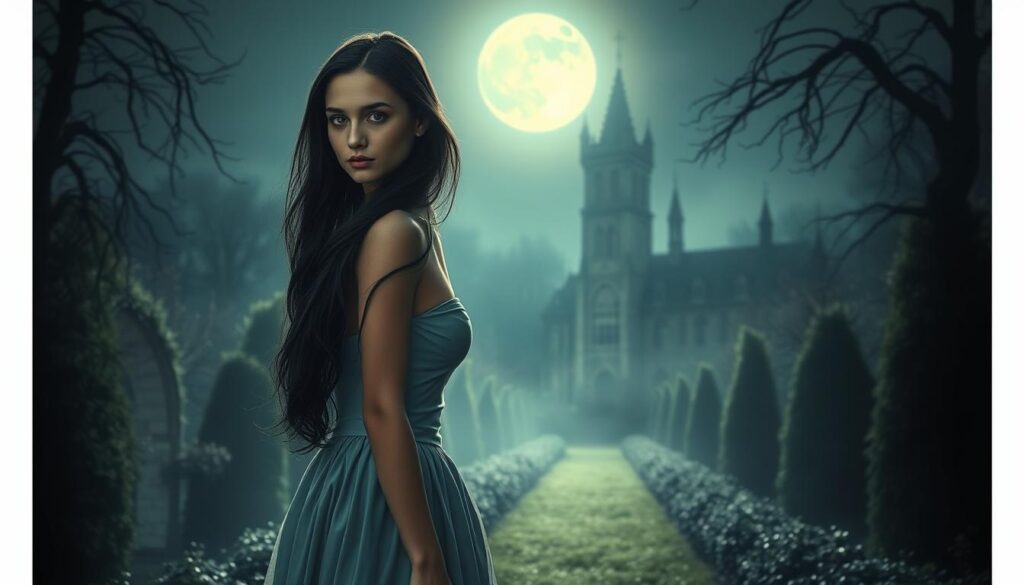
Lord Byron’s “She Walks in Beauty” is a masterpiece of gothic romance poetry. It paints a picture of beauty with both light and dark. Byron’s words bring to life a woman whose beauty goes beyond the physical.
Idealized Beauty in Gothic Romance
Byron’s poem makes beauty seem almost magical. The subject, inspired by his cousin, shows a perfect mix of contrasts. Her beauty is not just about looks but also about her inner qualities.
This idea of beauty is common in gothic romance. It makes beauty seem like something from another world.
Byron’s Blending of Light and Dark Imagery
The poem’s magic comes from its mix of light and dark. Byron says her beauty is like “the night of cloudless climes and starry skies.” This mix of dark and light is mesmerizing.
It shows the beauty of contrasts. This mirrors the complexity of beauty itself.
Byron’s view of beauty in “She Walks in Beauty” is unique. He mixes the ethereal with the real, the light with the dark. This creates a captivating portrait that has stood the test of time.
His poem is a testament to his skill. It shows why Byron is so beloved, ranking second only to Shakespeare in popularity in places like Germany and Russia.
“Softly as brown-eyed Angels rove” by Charles Baudelaire

Charles Baudelaire was a pioneer in French gothic poetry. He wrote “Softly as brown-eyed Angels rove” as a mix of beauty and darkness. This poem shows Baudelaire’s unique style, blending sensuality with the macabre.
Decadence and Sensuality in Gothic Poetry
Baudelaire’s work explores decadent themes. In “Softly as brown-eyed Angels rove,” he describes angelic beings with a hint of earthly desire. The poem’s imagery mixes the sacred with the profane, showing the tension of gothic romanticism.
Baudelaire’s Influence on Gothic Romanticism
Baudelaire’s impact on gothic literature is huge. He found beauty in the unusual and even the grotesque. This poem, from a collection in 2005 and 2006, shows his skill in evoking strong emotions.
The poem has 13 lines, a number with deep meaning. It connects to religious symbolism and mathematical curiosities. This adds to the mystique of Baudelaire’s work, making it a key piece in French gothic poetry.
“The Raven” by Edgar Allan Poe
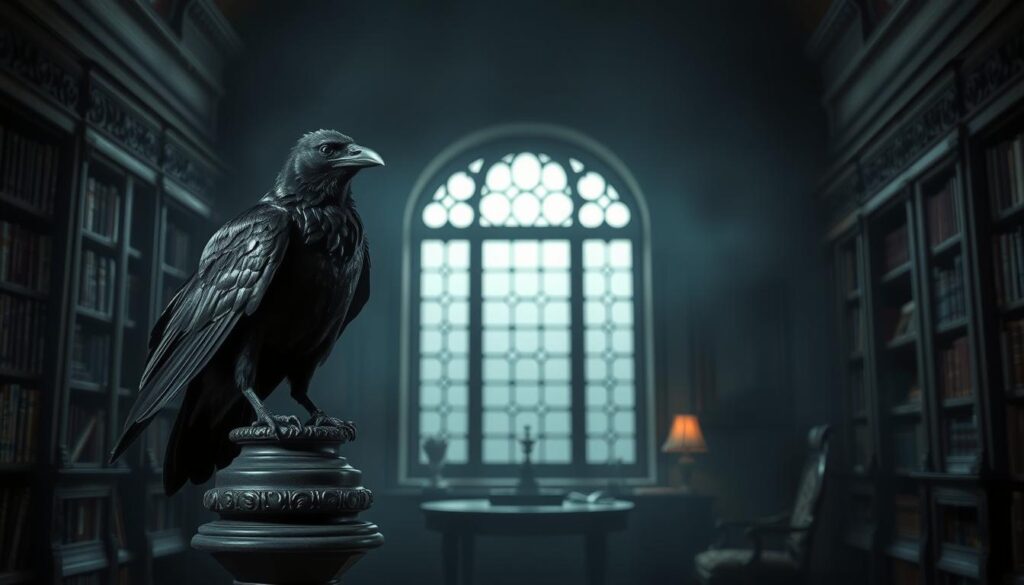
Edgar Allan Poe’s “The Raven” is a masterpiece of gothic poetry. Published in 1845, it has captivated readers for generations. Its haunting rhythm and dark themes are unforgettable.
The poem’s popularity is clear in its Goodreads stats. It has over 160,000 ratings and an average of 4.29 out of 5 stars.
Symbolism and Repetition in “The Raven”
Poe’s genius is seen in his use of symbolism and repetition. The raven symbolizes the narrator’s grief and impending madness. The word “Nevermore” is repeated, adding to the sense of despair.
This famous line has 356 likes on Goodreads. It shows its lasting impact on readers.
Poe’s Exploration of Grief and Madness
The poem explores loss and the descent into madness. Poe’s structure, with alternating syllable counts, reflects the narrator’s mental state. This mirrors the narrator’s growing madness.
The line “Deep into that darkness peering, long I stood there wondering, fearing, doubting, dreaming dreams no mortal ever dared to dream before” has 1,155 likes on Goodreads. It shows how deeply the poem resonates with readers.
Poe’s “The Raven” continues to captivate readers and scholars. Its lasting popularity and influence on gothic literature make it a key part of American poetry. It solidifies Edgar Allan Poe’s place as a master of the macabre.
“Kubla Khan” by Samuel Taylor Coleridge

Samuel Taylor Coleridge’s “Kubla Khan” is a stunning example of Gothic poetry. It was finished in 1797 but came out in 1816. This 54-line poem is filled with dream visions and exotic pictures.
The poem has three stanzas that don’t follow a regular pattern. This reflects the way it was written—during an opium dream.
Dream Visions in Gothic Poetry
“Kubla Khan” shows the power of dreams in Gothic literature. It takes readers to a world where dreams and reality mix. The poem talks about a river called Alph, which winds through caves that are too big for humans to measure.
This dreamlike quality has drawn readers for ages. It’s why “Kubla Khan” is often included in English literature collections.
Coleridge’s Use of Exotic Imagery
The imagery in “Kubla Khan” is a key part of Coleridge’s skill. The pleasure dome in Xanadu is a symbol of luxury and grandeur. It’s mentioned three times in the poem.
Coleridge uses nature imagery eight times in the poem. This creates a vivid, magical world. The mix of real and made-up things, like the river Alph, makes the poem even more captivating.
Over 10 films and songs have been inspired by “Kubla Khan.” This shows its lasting impact on culture.
Even though some people didn’t like it when it first came out, scholars now see it as one of Coleridge’s best works. It’s been studied in over 200 academic papers. These studies look at it from different angles, like Romanticism and ecocriticism.
The original manuscript is kept at the British Library in London. This highlights its importance in literature. “Kubla Khan” keeps readers hooked with its dreamy story and vivid pictures. It’s a key piece of Gothic Romantic poetry.