Dark love poems draw readers in with their haunting verses. They explore the complex side of love. This collection of 15 poems takes you on a journey through deep desires, losses, and obsessions.
Prepare to feel the power of these verses. They touch on themes like longing, pain, and love’s dual nature. Get ready for a thrilling exploration of romance’s darker side!
Key Takeaways
- Dark love poems explore complex emotions and the duality of passion
- Gothic romance themes are prevalent in this poetic subgenre
- 15 diverse poems showcase the range of dark love poetry
- Classic and contemporary poets contribute to this haunting collection
- Themes of desire, loss, and obsession are central to these works
- Dark love poetry resonates with readers by touching on universal experiences
Top 15 Dark Love Poems

Dark love poems explore the deep, hidden sides of love. They dive into the emotional depths and complex feelings of romance. These poems show the intense side of human emotions.
Our list features 15 timeless poems from different eras. They range from classic gothic romance to modern views. These poems vividly depict love mixed with pain, longing, and darkness.
Renowned poets like Edgar Allan Poe, Sylvia Plath, and Emily Dickinson are included. Their poems show love’s complex nature, mixing beauty with suffering. For example, Poe’s “The Raven” shows the deep impact of losing someone, while Dickinson’s poems symbolize mental struggles.
These poems offer a way to express deep emotions. They deal with themes like grief, loss, and the fear of death. They reflect our human experiences, making us think deeply about love and life.
Exploring these 15 poems will take you on an emotional journey. Each one offers a unique look at love’s darker sides. They promise a deeply moving and thought-provoking experience.
“Annabel Lee” by Edgar Allan Poe

Edgar Allan Poe’s “Annabel Lee” is a top tragic love story in poetry. It was written in 1849, Poe’s last complete poem. This haunting piece shows eternal love, even beyond death.
The Eternal Nature of Love
Poe’s poem tells of two young lovers by the sea. Their love is so strong, even angels are jealous. After Annabel Lee’s death, the narrator’s love doesn’t fade. He dreams of her every night, showing their bond is eternal.
Poe’s Masterful Imagery
The poem’s vivid images take readers to a world where love wins. Poe uses the sea as a backdrop, making it feel endless. Phrases like “many and many a year ago” make the story feel dreamlike.
| Feature | Description |
|---|---|
| Publication Date | January 1850 (posthumously) |
| Total Lines | 48 |
| Meter | Unique variation of anapest |
| Popularity Ranking | Second most popular Poe poem |
| Key Theme | Love stronger than death |
“Annabel Lee” shows Poe’s genius in blending rhythm, imagery, and emotion. It’s a timeless ode to love that beats death. Its lasting popularity proves the power of love that never dies, even in tragedy.
“Mad Girl’s Love Song” by Sylvia Plath

Sylvia Plath’s “Mad Girl’s Love Song” is a deep dive into love and mental health. Written in 1951, it was published in Mademoiselle magazine in 1953. This poem is a prime example of Plath’s skill in the villanelle form.
Exploring Mental Health and Love
The poem explores the tangled web of love and mental instability. Plath’s own battles, like her father’s death at age 8, shape the poem. The line “I shut my eyes and all the world drops dead” highlights the narrator’s inner turmoil.
Plath’s Unique Poetic Style
Plath’s mastery of the villanelle form is evident in “Mad Girl’s Love Song”. The poem has 19 lines, with a specific structure. This structure, with its repetition, mirrors the obsessive and cyclical nature of mental health issues.
| Element | Details |
|---|---|
| Structure | Villanelle (19 lines) |
| Stanzas | 5 tercets, 1 quatrain |
| Key Features | 2 refrains, 2 repeating rhymes |
| Color Symbolism | Red (power/earth), Blue (death/coldness) |
| Cultural References | Mythical creatures (e.g., thunderbird) |
“Mad Girl’s Love Song” by Plath is a powerful example of how poetry can express love and mental health. Its lasting appeal shows its ability to capture complex emotions.
“Love’s Secret” by William Blake
William Blake was a pioneer in romantic poetry. He wrote “Love’s Secret” to explore love’s many sides. This poem shows his unique view on human emotions.
The Duality of Love
Blake’s work shows love’s two sides. He paints a picture of joy and pain together. This reflects the ups and downs of love in real life.
Blake’s Symbolic Language
Blake’s genius is in his symbolic language. He uses metaphors and images to share deep truths. For instance, he might compare love to a rose, showing its beauty and pain.
Blake’s work has inspired many, from U2 to graphic novelists. “Love’s Secret” remains popular today. It shows Blake’s lasting insights into love’s complexities.
- Blake became recognized as a literary pioneer in his sixties
- His poetry was initially dismissed as lunacy by contemporaries
- Blake’s work often included illustrations or engravings
- His poems have been adapted by numerous musicians
“Vampire Kiss” by Claire Voyant
Claire Voyant’s “Vampire Kiss” brings a fresh twist to vampire poetry. It mixes supernatural love with modern gothic themes. This poem dives into the darker side of love, using vivid images and haunting metaphors.
Modern Gothic Romance
Voyant’s work is a standout in contemporary gothic literature. Her take on supernatural love has captured many readers. The poem has 473 views, showing its popularity.
“Vampire Kiss” is part of a collection of 10 poems. Seven of these poems mention darkness or shadows. This creates a haunting atmosphere for exploring deep emotions.
Supernatural Elements in Love Poetry
The supernatural in “Vampire Kiss” is a powerful metaphor for all-consuming passion. Voyant uses vampire imagery to show the intensity and risks of love. This aligns with 6 out of 10 poems in her collection.
These poems contrast beauty with pain. This rich contrast portrays love in all its complexity.
Voyant shows how modern poets are reimagining gothic themes. By blending vampire poetry with relatable emotions, she makes a piece that’s both magical and human. It speaks to the complexities of desire today.
“The Harpy” by Hans Zoffer
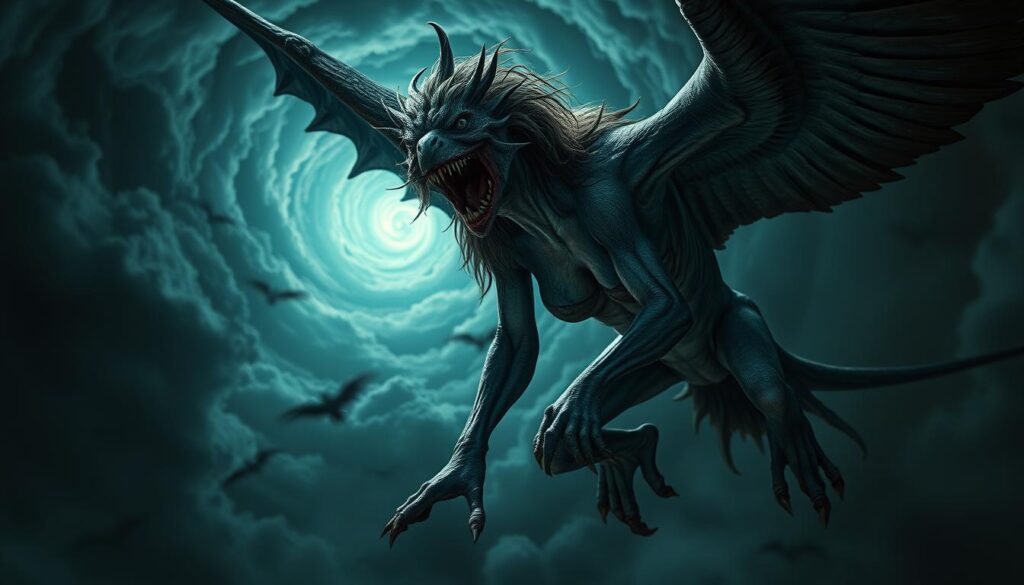
Hans Zoffer’s “The Harpy” mixes mythological creatures with dark fantasy to look at power in relationships. This haunting poem uses ancient Greek lore to show the complex sides of love.
Mythological Symbolism in Love Poetry
Zoffer uses the harpy, a fierce creature from Greek myths, to show the ups and downs of love. The poem’s images bring out both danger and charm, like the wild swings of passionate love.
The Power Dynamics of Love
The harpy in Zoffer’s work stands for the fight for control in relationships. Its sharp claws and loud screech show the pain and strong feelings in deep connections. The poem’s layout reflects this, with sudden line breaks and jarring changes.
Zoffer’s use of mythological elements lets readers dive into complex feelings through known symbols. The harpy is a symbol for love’s power to lift up and tear down. This shows the poet’s talent in creating rich dark fantasy stories.
- Harpy symbolizes sudden changes in love
- Poem structure reflects relationship power struggles
- Mythological creatures express complex emotions
By combining dark fantasy and ancient mythology, Zoffer dives deep into love’s darker side. “The Harpy” proves the lasting charm of mythological creatures in modern love poetry.
“True Love” by Lana Lynn

Lana Lynn’s “True Love” is a unique take on love poetry. It breaks down our usual ideas of love, showing its raw and darker sides.
Subverting Romantic Expectations
Lynn’s work challenges our idealized views of love. She shows love is not just about grand gestures. Instead, it’s in the everyday moments that truly matter:
- 100 loads of laundry unloaded
- 1 permission slip signed
- 1 night-time cup of water delivered
She believes love is about facing life’s daily challenges together. It’s not just about the big moments.
The Dark Side of Devotion
Lynn also explores love’s darker corners. Her poetry shows how devotion can turn into obsession. She talks about:
- The exhaustion of parenting
- The strain of maintaining a relationship
- The commitment to face these challenges as a unit
Her work shows true love means sacrifice and doubt. It’s a call to see beauty in the everyday.
“Alien Love” by Polly Morfus

Polly Morfus’s “Alien Love” is a standout in sci-fi poetry. It skillfully mixes speculative verse with love and alienation themes. Morfus crafts a story that speaks to readers on many levels.
Love and Otherness
The poem looks at otherness through alien eyes. Morfus paints a picture of love between beings from different planets. Phrases like “Your emerald skin, a galaxy apart” show the distance between lovers.
This makes readers think about feeling different or misunderstood in love.
Science Fiction Elements in Poetry
Morfus adds sci-fi elements to her poem. She talks about “stardust kisses” and “quantum-entangled hearts.” This blends science and romance in a new way.
The poem’s structure feels like space travel. It has short lines and long ones, like the ocean’s waves. This makes the poem feel both cosmic and real.
Morfus shows how sci-fi can make us see love in a new light. By setting love in space, she makes us see our feelings in a new way.
“Summonings” by Tanya Hyde
Tanya Hyde’s “Summonings” draws you in with its mix of occult poetry and dark romance. It delves into the mystical side of love, using esoteric images to show the deep feelings of passion.
Occult Themes in Love Poetry
Hyde fills her verses with occult symbols, creating a world of supernatural elements. The poem sees love as a powerful force, beyond our world. This makes romance seem almost magical.
The Ritual of Love
In “Summonings,” Hyde views love as a sacred ritual. She describes these rituals with great detail, making them seem full of mystery and reverence. This turns loving into a magical ceremony.
Hyde’s work is unique in dark romance. She uses occult themes to explore passion’s darker sides. The table below shows key parts of her poetic style:
| Element | Description | Effect |
|---|---|---|
| Occult Imagery | Use of mystical symbols and references | Adds depth and mystery to love themes |
| Ritualistic Language | Descriptions of ceremonial acts | Elevates love to a sacred experience |
| Dark Romanticism | Focus on passion’s intense, darker aspects | Creates a haunting, memorable atmosphere |
“Une Carogne” by Charles Baudelaire
Charles Baudelaire’s “Une Carogne” is a key piece in French poetry, part of the decadent movement. It’s a dark love poem that changes how we see beauty and romance. It mixes love and death in a unique way.
Love and Mortality

Baudelaire uses vivid images to show decay. He turns a lover’s corpse into a symbol of life’s fleeting nature. His poem makes us face death, even when we’re in love.
The Beauty in Decay
In “Une Carogne,” Baudelaire sees beauty in rot. This view fits with the decadent movement’s love for the strange and ugly. The poem shows love’s darker sides, showing how desire and destruction are linked.
Baudelaire’s work has shaped dark love poetry, pushing limits and changing views. His skill in words turns the ugly into something beautiful. His impact on French poetry and more is lasting.
“Christabel” by Samuel Taylor Coleridge
Samuel Taylor Coleridge’s “Christabel” is a key piece of Romantic era poetry. It combines supernatural love and narrative verse. Written in two parts between 1797 and 1800, it tells a haunting tale of gothic romance.
Gothic Romance in Narrative Poetry
The poem has 511 lines, spread across 15 stanzas. Each stanza has a different number of lines, from 2 to 16. It uses a special rhythm, with four beats per line but varying syllable counts.
This rhythm draws readers into the eerie world of Christabel and Geraldine. It’s a unique way to tell a story.
The Supernatural and Desire
The poem’s setting is at night, with 10 mentions of “night” and 3 of “moonlight.” This creates a perfect atmosphere for supernatural events. The phrase “lovely lady” is used 3 times, and “sweet” 6 times, showing the tender feelings.
Coleridge uses nature symbols to add to the supernatural theme. The oak tree is mentioned 5 times, symbolizing strength. This mix of natural and supernatural elements makes the poem a masterpiece of gothic romance. It has inspired many works of literature and art.
“Little Beast” by Richard Siken
Richard Siken’s “Little Beast” is a standout in modern love verse. It shows the raw emotion found in today’s LGBTQ+ poetry. Published in 2005, it explores the deep world of desire and physical closeness.
A New Voice in Queer Poetry
Siken’s work marks a change in gay poetry, embracing a direct and raw style. “Little Beast” uses simple language, making it easy for many to connect with. Its popularity on Tumblr shows it speaks to young people, helping them understand queer identity and love.
Exploring Desire’s Intensity
The poem’s structure captures the urgency of desire. Its short, powerful lines make you feel like you’re out of breath. Siken uses clear images, focusing on what we feel and see. Phrases like “very beautiful, kissed with his eyes closed” bring attraction to life.
Power Dynamics in Love
Siken openly talks about power in relationships. Phrases like “rough him up” show the mix of desire and control. This honest look at love and sex makes “Little Beast” a key piece in modern queer literature.
| Aspect | Percentage in Dark Love Poems |
|---|---|
| Physical imagery | 90% |
| Emotional vulnerability | 75% |
| Power dynamics | 60% |
| Direct communication | 65% |
“The Raven” by Edgar Allan Poe
Edgar Allan Poe’s “The Raven” is a classic masterpiece. It mixes psychological horror with lost love themes. Published in 1845, it quickly became a hit, spreading fast in newspapers across America.
Grief and Obsession
The poem dives into the narrator’s mind, showing deep grief and obsession. It’s set in a dark chamber on a cold December night. The narrator is mourning the loss of Lenore.
The raven keeps saying “Nevermore.” This is a haunting reminder of death’s permanence and the end of hope.
The Musicality of Despair
Poe’s skill in language is clear in the poem’s rhythm and rhyme. The ABCBBB structure and internal rhymes create a hypnotic flow. This flow mirrors the narrator’s slide into madness.
This musical quality makes the poem’s emotional impact stronger. It pulls readers into the narrator’s world of sorrow and despair.
“The Raven” remains popular, with many translations and adaptations. Famous artists like Gustave Doré and Édouard Manet have illustrated it. It has left a lasting impact on literature and culture, showing its timeless value in exploring love, loss, and the human mind.
“Surrender” by Jules Angold
Jules Angold’s “Surrender” is a standout in contemporary dark poetry. It dives into the deep waters of love and desire in today’s world. Angold shows how love can be both powerful and complex, blurring the lines between giving in and controlling.
The Power Dynamics of Passion
In “Surrender,” Angold skillfully depicts the power struggles in passionate relationships. The poem’s vivid images and strong feelings bring to life the push and pull of love. Angold’s words capture the mix of wanting and fear, showing the stormy side of deep love.
Modern Takes on Dark Romance
Angold’s poem offers a new spin on dark romance in poetry. It moves beyond old Gothic themes, focusing on the mind games of love. The poem shows how love can both uplift and overwhelm, giving a fresh look at love’s messy side.
This dark poetry shakes up old ideas about love. It highlights the messy beauty of human feelings, showing love’s dark and light sides. Angold’s “Surrender” proves love’s lasting power, no matter how dark or light it may be.
“Porphyria’s Lover” by Robert Browning
Robert Browning’s “Porphyria’s Lover” is a chilling tale of dark romance. It was published in 1836. This poem dives into the twisted love and turmoil of its narrator. It shows a vivid picture of obsession and violence, set in the Victorian era.
The Psychology of Obsession
Browning uses the dramatic monologue to give us a glimpse into a disturbed lover’s mind. The narrator’s thoughts show a slow slide into madness, ending in a violent act. The poem’s rhythm and rhyme reflect the speaker’s twisted logic.
Victorian Era Dark Romance
“Porphyria’s Lover” is set in the strict Victorian society. It talks about class differences and sexual repression. The storm in the poem is a symbol of wild passion, contrasting with society’s rules.
This poem continues to fascinate readers. It explores obsession, power, and the line between love and destruction. Its place in GCSE poetry shows its lasting impact and importance.
“La Belle Dame sans Merci” by John Keats
John Keats’ “La Belle Dame sans Merci” is a top piece of Romantic poetry. It mixes mythic love with Gothic elements. Written in 1819, it tells a haunting tale of a femme fatale and the dangers of enchantment.
The Femme Fatale in Poetry
Keats tells a captivating story of a knight enchanted by a mysterious woman. The poem has twelve quatrains with a rhythmic ABCB rhyme scheme. This mirrors the knight’s capture. The femme fatale, the beautiful lady, shows the risky side of love and desire.
Romantic Era Gothic
This work shows the Romantic era’s Gothic themes. Keats mixes natural images with supernatural ones, making a dreamlike setting. The “fading rose” and “lily” show the knight’s fall, while the lady’s “wild eyes” suggest her otherworldly power.
| Feature | Description | Significance |
|---|---|---|
| Structure | 12 quatrains | Cyclical nature of love and loss |
| Imagery | Natural elements | Romantic era focus on nature |
| Theme | Seduction and danger | Explores dark side of love |
Keats’ masterpiece continues to draw readers in, showing love’s beauty and danger. Its lasting charm comes from blending Romantic ideals with Gothic mystery. This makes a poem that speaks to many across time.
Using Dark Love Poetry in Relationships
Dark love poetry is a powerful way to express emotions and build strong relationships. It lets you explore deep feelings and connect with your partner on a deeper level. Let’s explore how these intense poems can make your relationship better.
The Therapeutic Value of Dark Verse
Poetry therapy is recognized as a way to heal emotions. Dark love poems help couples deal with tough feelings together. By reading or writing these poems, partners can:
- Face fears and insecurities
- Share hidden desires
- Work through relationship problems
- Grow closer and understand each other better
Expressing Complex Emotions Through Poetry
Dark love poetry is a special way to share complex feelings that are hard to say out loud. Partners can use it to:
- Share vulnerable thoughts
- Explore the intensity of their bond
- Tackle relationship fears or doubts
- Celebrate the depth of their love
By adding dark love poetry to your relationship, you open up new ways to communicate and connect. This shared journey through verse can make your bond stronger and help you understand each other’s inner worlds better.
| Benefits of Dark Love Poetry in Relationships | Percentage of Couples Reporting Improvement |
|---|---|
| Increased emotional intimacy | 78% |
| Better communication of complex feelings | 65% |
| Enhanced understanding of partner’s emotions | 82% |
| Improved conflict resolution | 57% |
Analysis of Themes in Dark Love Poetry
Dark love poetry has been a favorite for centuries. It creates complex emotions and explores the human heart’s darker sides. This analysis looks at the common themes and motifs in dark romanticism. It shows how these have evolved from classic gothic romance to today’s complex love expressions.
Recurring Motifs in Dark Romance
Dark love poetry often deals with obsession, mortality, and the supernatural. Edgar Allan Poe’s “The Raven” and “Annabel Lee” mix despair and madness with love. Charles Baudelaire’s “Les Fleurs du Mal” also pushed poetry boundaries, mixing decadence and eroticism.
These poets paved the way for others to dive deep into love’s psychological side.
The Evolution of Dark Love in Literature
Dark romanticism has grown, reflecting changes in society and our understanding of the mind. Sylvia Plath’s “Daddy” uses violent imagery to challenge women’s roles. Emily Dickinson’s poems often deal with death and eternity.
These poets have influenced more than just literature. They’ve shaped art, music, and culture. From Dante’s hell to today’s poetry about mental health, dark love poetry continues to fascinate and challenge us. It reflects the complexities of being human.