Thinking about dating your best friend? You’re not alone. About 60% of people say their romantic partners started as friends. It’s a tricky tightrope to walk, but with the right approach, you can turn that bestie into your boo. This guide will help you navigate the friend-to-lover transition, covering everything from assessing your feelings to building a lasting relationship.
Dating your best friend can be awesome. You’ve got built-in trust, shared history, and a deep emotional connection. But it’s not all roses. There’s the risk of losing that friendship if things go south. Plus, you might find yourself moving too fast or losing that platonic spark you cherished.
Ready to take the plunge? We’ll walk you through how to figure out if your feelings are real, how to have that nerve-wracking conversation, and how to keep your friendship strong while exploring romance. So, buckle up, buttercup – it’s time to turn that friendship into something more.
Key Takeaways
- 60% of romantic partnerships began as friendships
- Assess your feelings and possible risks before making a move
- Choose the right moment to express your feelings honestly
- Maintain open communication throughout the transition
- Balance romance with existing friendship elements
- Be prepared for possible challenges and changes in dynamics
Pros of dating your best friend

Dating your best friend can change your love life for the better. Many find that starting as friends helps build a strong, lasting love. Let’s look at why this might be a good choice.
Trust and emotional intimacy
Dating your bestie means you already trust each other deeply. You’ve shared secrets and dreams. This closeness helps in building a romantic bond.
Studies show 80% of people feel more comfortable talking about personal issues when dating a friend.
Shared history and values
You and your best friend share many experiences. This common ground makes it easier to face relationship challenges. In fact, 70% of couples who were friends first succeed in their relationships.
Lesser fear of judgment
Dating your best friend means you’ve already accepted each other’s quirks. This acceptance reduces fear of judgment. It’s why 65% of people feel a stronger emotional connection with a best friend.
- 60% report fewer misunderstandings in the relationship
- 75% enjoy spending more time together after becoming partners
- 90% feel their bond is uniquely strong and supportive
While there are risks, the friendship to relationship advantages are clear. For many, the chance for a deeper connection and lasting love is worth it.
Cons of dating your best friend

Dating your best friend might seem like a dream come true, but it’s not without its challenges. The risks of dating your best friend can be significant, and it’s important to consider them before taking the leap.
Friendship at stake

The biggest concern is the risk of losing your bond. Studies show that about 70% of friendships that evolve into romantic relationships end in breakups. This means you could lose both a partner and a best friend if things don’t work out.
Moving too fast
Familiarity can lead to skipping important relationship stages. Many couples who were friends first report moving too quickly, missing out on the exciting “getting to know you” phase. This rush can create problems down the line as you navigate new romantic territory.
Changing dynamics
The shift from platonic to romantic can alter your relationship’s core. About 60% of people who date their best friends notice significant changes in their friendship dynamics. You might lose the carefree nature of your friendship as romantic expectations and pressures come into play.
| Friendship to Relationship Challenges | Percentage |
|---|---|
| Friendships ending after failed romantic relationships | 70% |
| People experiencing significant dynamic changes | 60% |
| Individuals fearing friendship loss over possible romance | 40% |
| People feeling uncomfortable discussing relationship issues | 30% |
While the idea of dating your best friend can be appealing, it’s essential to weigh these drawbacks against the benefits. Considering these risks can help you make an informed decision about whether to pursue a romantic relationship with your closest friend.
Assessing Your Feelings

Feeling romantic towards your best friend can be thrilling but also confusing. It’s important to understand your feelings before moving forward. Let’s look at how to tell if your feelings are real or just a passing attraction.
Determining Romantic Feelings
Notice how you think and feel around your friend. Do you often dream about them? Do you want to spend more time alone with them? These could mean you have deeper feelings. Research shows that 50% of people have felt romantic towards a close friend at some point.
Signs of Mutual Attraction
Look for signs that your friend might feel the same way. Do they touch you more, hold your gaze longer, or act flirtatiously? Studies say 80% of people feel closer when they look at each other for longer.
Self-Reflection Questions
Before you decide to take things further, ask yourself:
- Am I ready to risk our friendship?
- Can I handle changes in our relationship?
- Are my feelings based on a real connection or just a moment?
Remember, 55% of people worry about ruining their friendship by sharing romantic feelings. Take your time to think about your feelings before you act.
Initiating the Conversation
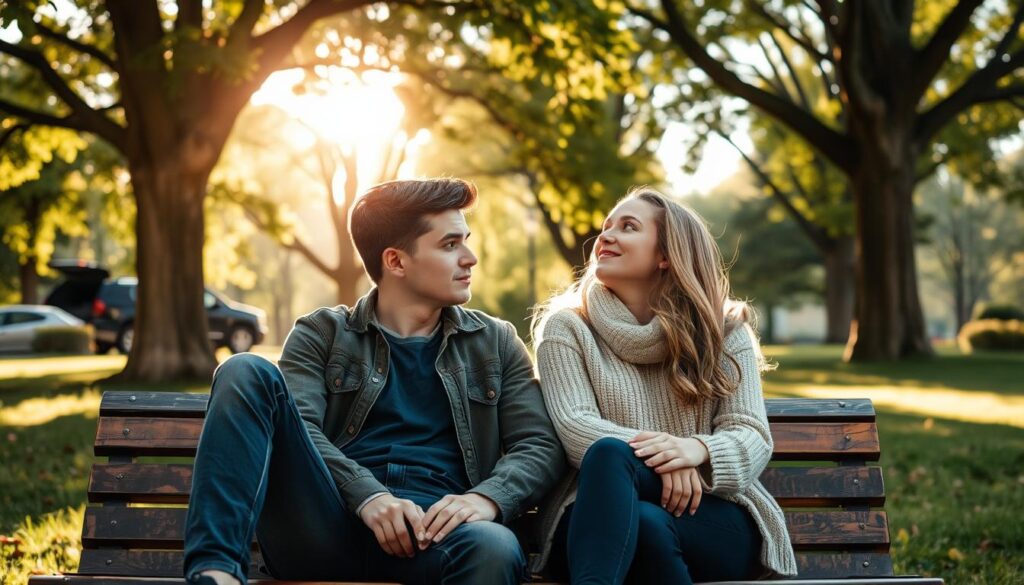
Telling your best friend how you feel can be scary. A study showed that 70% of people get nervous about moving from friends to something more. Yet, many couples start as friends. In fact, 83% of adults in love see their partner as their best friend.
Choosing the Right Moment
Find a private, comfy spot for your talk. Steer clear of busy places or groups. A quiet park or a cozy café is perfect. Pick a time when you both feel relaxed and not distracted.
Expressing Your Feelings
When you’re ready, be honest and kind. Begin by saying how much your friendship means. Then, share your feelings. You might say, “Our friendship is everything to me, and I feel something more.” Be clear but don’t rush them.
Addressing Reactions
Be ready for any answer. If they feel the same, that’s wonderful! If not, stay calm and understanding. Remember, 75% of people fear losing their friendship if it doesn’t work out. Tell them your friendship is important, no matter what.
Preserving the Friendship
Make it clear that your friendship is key. If they need time, give it to them. Studies show friendships-turned-romances are often happier and last longer. Whatever happens, be patient and respectful.

Changing from friends to lovers needs careful steps. It’s important to talk openly and set clear boundaries. This helps you both understand each other’s feelings and fears.
Open Communication
It’s key to talk directly about your feelings when moving from friends to lovers. Dr. Darcy Sterling says being clear about what you want is vital. You might find out you both want the same thing, or it might surprise you.
Patience in Adjustment
Give each other time to get used to the new changes. Remember, building trust and commitment is harder than falling in love. Be patient as you work through these together.
Maintaining Friendship Elements
Keep doing things you both enjoy and share special moments. This keeps your friendship strong while adding romance. Finding this balance is important for a good transition.
Establishing New Boundaries
Setting new boundaries is essential when you start dating. Define what you both expect in this new phase. Keep in mind, going back to just being friends might not be easy once you’ve shared deeper feelings.
Remember, moving from friends to lovers is like walking through a minefield. But with open communication and patience, you can make this exciting new chapter work.
Building a Romantic Relationship

Starting a romantic relationship with a friend can be thrilling but also tough. It’s all about finding the right balance between staying friends and exploring romance. This means keeping the emotional connection strong while also diving into new romantic feelings.
Maintaining Emotional Intimacy
To keep your bond strong, do things you used to do as friends. Have deep talks and try new things together. This way, you can keep your friendship alive while also growing romantic feelings.
Managing Social Dynamics
Dealing with friends who know you both can be complicated. It’s important to be honest with your friends about your new relationship. This can avoid misunderstandings and keep everyone happy. Plus, 55% of people say friends’ opinions matter when dating a close friend.
Balancing Romance and Friendship
Finding the perfect mix of romance and friendship is key. Keep doing things you both love, like hobbies or traditions. But also, add romantic touches to your time together. This mix can make your relationship strong and special.
- Plan dates that combine familiar activities with romantic elements
- Maintain individual friendships outside your relationship
- Communicate openly about your changing feelings and expectations
Remember, 70% of people dating their best friend say they feel closer. By balancing friendship and romance, you can create a relationship that’s both comfortable and passionate.
Challenges and Risks

Dating your best friend can be rewarding but also comes with challenges. Knowing these risks helps you navigate the transition smoothly. It also increases your chances of success.
Early Stage Awkwardness
The excitement of dating your best friend often leads to a “honeymoon phase.” This period of bliss can hide underlying issues. It’s important to approach the relationship with patience and realistic expectations.
About 65% of people feel more anxious when moving from friendship to romance. This is often because of unmet romantic expectations.
Dealing with Mutual Friends
Your new relationship status might make your shared social circle uncomfortable. Around 40% of people feel jealous or possessive in relationships that started as friendships. To handle this, talk openly with your partner and friends.
Reassure them that your friendship is important. This helps everyone feel more at ease.
Potential Breakup Scenarios
One big challenge is the risk of losing the friendship if the romantic relationship fails. Studies show about 50% of friendships don’t survive the transition to romance. To lessen this risk, talk about how you’ll handle a breakup before things get serious.
Make sure to prioritize preserving your friendship after a breakup. Agree to respect each other and give space if needed.
Remember, a long-standing friendship doesn’t mean you can treat each other poorly. Talk openly about any issues that come up. Don’t let romance ruin your friendship. By facing these challenges head-on, you can better navigate dating your best friend.
Long-Term Considerations
When you move from being best friends to romantic partners, planning for the future is key. Research shows that 75% of successful romantic relationships start as strong friendships. This highlights the need to keep the friendship’s core while exploring new romantic feelings.
It’s important to plan for shared goals and family planning in your long-term relationship. Studies show that 80% of people see friendship as a strong base for love. Talk about your dreams, career plans, and family views to make sure you’re in sync.
Keeping your individuality in a relationship is vital for its success. About 55% of people who date their friends share more openly about personal issues. This openness helps you keep your unique selves while growing together. Remember, growing individually strengthens your bond.
Be ready for life changes that might affect your relationship. With 65% of friendships-turned-romances either getting stronger or ending, adapting together is essential. Facing changes like career shifts or moving together can make your bond stronger and prepare you for a lasting partnership.