Loving someone with borderline personality disorder (BPD) needs understanding, patience, and constant support. BPD affects about 1.6% of U.S. adults, making it hard to manage emotions and keep stable relationships. Yet, building a loving bond with a BPD partner is both challenging and rewarding.
To effectively love someone with BPD, learn about the disorder and its signs. Knowing this helps you handle the emotional highs and lows common in BPD relationships. Remember, their reactions are not personal attacks but symptoms of their condition.
Building trust and security is essential in BPD relationships. Be consistent in what you do and say, as people with BPD fear being abandoned. Validate their feelings, even if you don’t agree with their views. This creates a safe emotional space for them.
Setting healthy boundaries is also critical when loving someone with BPD. Clear, firm boundaries are good for both partners’ well-being and can make the relationship stronger. Finding this balance is key for a healthy partnership.
Key Takeaways
- Educate yourself about BPD and its symptoms
- Practice patience and consistent support
- Validate your partner’s feelings without judgment
- Establish clear, healthy boundaries
- Build trust through consistent actions and words
- Seek professional help and support when needed
- Practice self-care to maintain your own well-being
Understanding Borderline Personality Disorder and Its Impact on Relationships
Borderline Personality Disorder (BPD) affects over four million Americans, causing big problems in relationships. People with BPD have intense emotions and unstable moods. This makes it hard to keep relationships healthy. Let’s explore the details of BPD symptoms and their effects on relationships.
Core Symptoms and Behavioral Patterns
BPD symptoms can make relationships feel like a roller coaster. Those with BPD often show five or more symptoms for a long time, starting in late teens. These symptoms can make relationships feel like walking on eggshells.
| BPD Symptoms | Impact on Relationships |
|---|---|
| Fear of abandonment | Clingy behavior, frequent reassurance-seeking |
| Unstable self-image | Difficulty maintaining consistent roles in relationships |
| Impulsivity | Reckless decisions affecting partner trust |
| Emotional instability | Rapid mood swings, intense reactions to minor triggers |
| Chronic feelings of emptiness | Dependency on partner for emotional fulfillment |
In BPD relationships, partners often feel overwhelmed by intense emotions and unpredictable behaviors. A 2017 study found that people with BPD feel stronger rejection when their emotional needs aren’t met. This leads to more anger and fear.

But, there’s hope. With the right treatment and support, people with BPD can improve their relationships. Therapy like dialectical behavior therapy helps manage symptoms and improve social skills.
Recognizing the Signs of BPD in Your Partner
Understanding the signs of BPD in your partner can help you navigate your relationship more effectively. Borderline Personality Disorder (BPD) affects about 1.6% of adults in the U.S., impacting their relationships significantly. If you suspect your BPD partner might have this condition, look out for these key indicators:

- Fear of abandonment
- Intense mood swings
- Unstable self-image
- Impulsive behaviors
- Chronic feelings of emptiness
People with BPD often experience rapid shifts in emotions, sometimes lasting for hours. Their relationships tend to be unstable, marked by cycles of idealization and devaluation. Research shows that about 90% of individuals with BPD face relationship instability due to these symptoms.
It’s important to remember that only a mental health professional can diagnose BPD. If you notice these signs in your partner, encourage them to seek professional help. With proper treatment, such as Dialectical Behavior Therapy (DBT), about 50% of individuals with BPD show significant improvement over time.
The Importance of Emotional Validation and Support
Emotional validation is key in supporting someone with BPD. Many with this disorder didn’t get enough validation when they were young. This can make their emotions intense and their sense of self fragile.
Those with BPD often feel like their feelings are not valid. This can make their mental health worse and slow down their recovery. By supporting them emotionally, you help them manage their feelings and feel better overall.

Active Listening Techniques
Active listening is essential for emotional validation. Here are some effective ways to do it:
- Give your full attention
- Avoid interrupting or solving problems right away
- Reflect back what you’ve heard
- Validate their feelings without judgment
Listening and acknowledging their feelings helps them calm down. Using these techniques strengthens your bond with them.
Studies show that feeling emotionally validated helps people with BPD manage their emotions better. This can lead to better mental health, less self-harm, and stronger relationships.
Setting Healthy Boundaries While Maintaining Connection
Setting boundaries in BPD relationships is key for a healthy bond. It’s like guardrails on a winding road – they keep you safe without stopping the journey. People with BPD often find it hard to set limits. But, clear boundaries can actually help them navigate the world better.

When setting boundaries, be clear and kind. Say what you need without blame. For example, “I need some alone time to recharge” instead of “You’re too demanding.” Remember, your partner might see boundaries as rejection at first. Stay calm and reassure them of your care.
Consistency is key in maintaining healthy boundaries. Stick to your limits, even when it’s tough. This helps build trust and respect over time. It’s also important to recognize your partner’s efforts when they respect your boundaries.
- Be clear about your needs and limits
- Communicate boundaries with kindness
- Stay consistent in enforcing boundaries
- Acknowledge when boundaries are respected
Setting boundaries isn’t about pushing your partner away. It’s about creating a safe space for both of you to grow. With patience and practice, boundaries can strengthen your connection and foster a more stable, loving relationship.
How to Love Someone with BPD
Loving someone with borderline personality disorder (BPD) needs patience, understanding, and commitment. BPD affects about 1.6% of U.S. adults, with some estimates as high as 5.9%. People with this condition often face intense emotions and fear of being left behind. Building trust and security is key for a healthy relationship.

Creating a Safe Haven
Trust in BPD relationships can be delicate due to past experiences. To build security, consider these strategies:
- Be consistent in your words and actions
- Communicate openly and honestly
- Show empathy during emotional episodes
- Validate their feelings without judgment
- Maintain boundaries while supporting them
Remember, individuals with BPD may have extreme mood swings lasting hours or days. By staying steady and supportive, you can help create stability. Loving someone with BPD means being their anchor during tough times.
Building trust takes time and effort. Be patient with your partner and yourself. Encourage professional help, as therapies like Dialectical Behavior Therapy (DBT) have shown significant improvement in 50% of individuals after one year. Your unwavering support and proper treatment can lead to a fulfilling relationship built on mutual trust and understanding.

Splitting is a big part of Borderline Personality Disorder (BPD). People with BPD see things as either completely good or completely bad. This makes their emotions very intense, which can make relationships hard.
When someone with BPD splits, they might see you as either all good or all bad. This can be confusing and hurtful. But remember, it’s not about you. It’s a sign of their condition. Stay calm and don’t get into fights during these times.
Managing BPD emotions takes patience and practice. Here are some tips to help you get through splitting episodes:
- Validate their feelings without agreeing with their perspective
- Use “I” statements to express your own emotions
- Take breaks if conversations become too heated
- Encourage your partner to use coping skills learned in therapy
- Maintain consistent boundaries to provide stability
Studies show that 75% of people with BPD get better with just 50 hours of therapy. Supporting your partner in their treatment can help them manage their emotions better. This can lead to fewer splitting episodes over time.
Supporting Your Partner’s Treatment Journey
Understanding treatment options is key when supporting a partner with BPD. BPD treatment has evolved, with Dialectical Behavior Therapy (DBT) leading the way. DBT teaches important skills like mindfulness, distress tolerance, and emotional regulation.

Effective Treatment Approaches
DBT has shown great results. In fact, 70% of participants in online DBT group therapy saw big improvements in just 8 weeks. This therapy combines different psychotherapy methods, focusing on mindfulness and acceptance to better manage emotions.
Other effective BPD treatment options include:
- Cognitive Behavioral Therapy (CBT)
- Mentalization-Based Therapy (MBT)
- Transference-Focused Psychotherapy (TFP)
As a supportive partner, encouraging your loved one to try these options is important. About 60% of patients with BPD find DBT helpful. Your understanding and patience can greatly impact their treatment journey.
Remember, setbacks are normal. Celebrate small wins and stay updated on BPD. This knowledge will help you support your partner better. And don’t forget, you need support too.
Managing Crisis Situations and Extreme Behaviors
Loving someone with Borderline Personality Disorder (BPD) means facing intense emotional storms. Effective bpd crisis management is key to getting through these tough times. People with BPD might harm themselves or think about suicide, so it’s important to spot warning signs early.

When dealing with extreme bpd behaviors, stay calm and validate your partner’s feelings. Make a safety plan together. This could include calling a therapist, using coping skills, or getting medical help if needed.
De-escalation techniques can save lives. Speak softly and avoid judging. About 70% of people with BPD may try to harm themselves or die by suicide. If you see signs of self-harm or suicide risk, call emergency services or the Suicide & Crisis Lifeline at 988.
Being consistent is important in managing relationships with individuals affected by BPD. Set clear boundaries and keep them, even when it’s hard. This helps create stability and security for both partners.
- Recognize warning signs early
- Create a detailed safety plan
- Use de-escalation techniques
- Maintain consistent boundaries
- Seek professional help when needed
Remember, taking care of yourself is important too. Loving someone with BPD can be emotionally draining. So, make sure to take care of yourself and seek support when you need it. With patience, understanding, and the right strategies, you can navigate crises and build a stronger relationship.
Self-Care Strategies for Partners of People with BPD
Living with someone who has Borderline Personality Disorder (BPD) can be tough. That’s why self-care for BPD partners is key. It’s not selfish – it’s essential for a healthy relationship and your well-being.
Recognizing Caregiver Fatigue
Studies show 40% of partners of those with BPD feel anxious and depressed. Spotting burnout is the first step in self-care.

Maintaining Personal Boundaries
Setting and keeping boundaries in BPD relationships is critical. You’re not to blame for someone else’s actions. Healthy boundaries protect your mind and strengthen your bond.
| Self-Care Strategy | Benefit |
|---|---|
| Maintain outside relationships | Reduces isolation, provides support |
| Pursue personal interests | Preserves identity, reduces stress |
| Seek professional support | Provides coping strategies, prevents burnout |
Remember, caring for yourself isn’t failing – it’s keeping you strong for your partner. By using these self-care tips, you’ll handle the ups and downs of loving someone with BPD better.
Building Long-term Relationship Stability

Creating a stable relationship with BPD is possible with effort. Studies show that 70-80% of people with BPD face relationship instability. Yet, with the right approach, couples can build lasting connections.
Consistency is key in a long-term BPD relationship. Set shared goals and celebrate small wins together. This builds trust and security over time. Patience is also important as BPD symptoms can improve with treatment. In fact, therapy like DBT reduces symptoms in about 60% of patients.
Open communication is vital for stability. Couples who prioritize clear dialogue report a 30% increase in relationship satisfaction. Regular routines and self-care practices can boost relationship happiness by 40%.
Remember, building a stable relationship with BPD is a journey. It requires effort from both partners. With understanding, support, and professional help when needed, couples can create strong, lasting bonds.
- Set shared goals and celebrate achievements
- Maintain consistent routines and self-care practices
- Engage in open, honest communication
- Seek professional help when needed
- Practice patience and understanding
Understanding the BPD Relationship Cycle
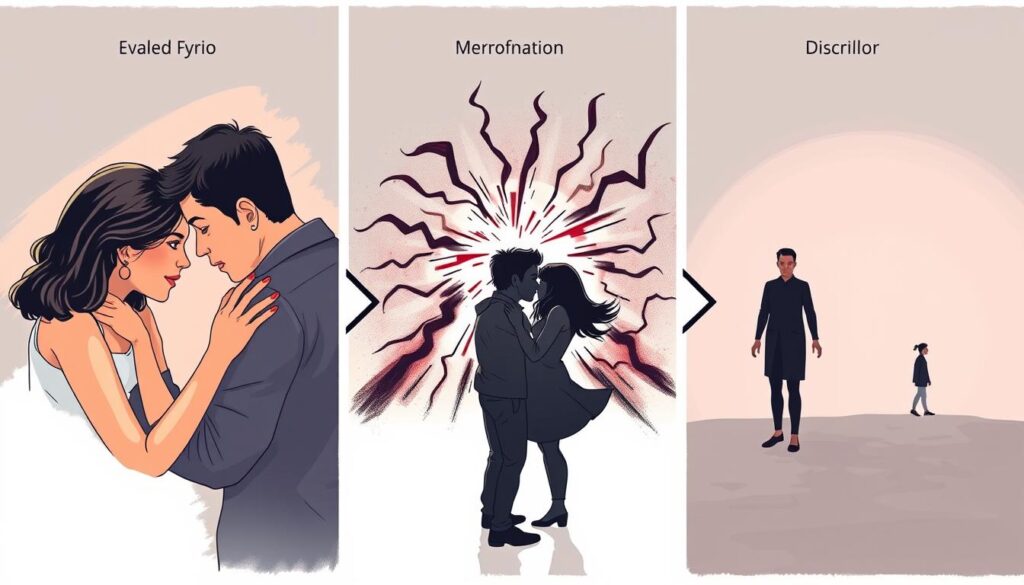
The bpd relationship cycle is full of ups and downs. It can switch from love to hate quickly. About 1.4% of U.S. adults have Borderline Personality Disorder (BPD), making it hard to keep relationships stable.
Relationships with BPD go through six stages, but the time frame varies. One moment, partners might idealize each other, and the next, they might devalue them. This back-and-forth can cause a lot of emotional pain.
Identifying Trigger Points
It’s important to know what triggers BPD. Common ones include:
- Fear of abandonment
- Unmet emotional needs
- Perceived rejection
- Stress or major life changes
These triggers can make people feel very emotional. They might get angry or try hard to stay together. Knowing these triggers helps partners deal with the ups and downs of BPD relationships.
Even though it’s tough, some BPD relationships last a long time. Some couples stay together for over 20 years. With the right support and treatment, partners can learn to handle the bpd relationship cycle better. This can lead to healthier and more stable relationships.
Effective Communication Strategies for BPD Relationships

Talking to a BPD partner needs patience and understanding. Studies show that good communication can make a big difference. It can boost happiness in a relationship by up to 40% if one partner has BPD.
Using “I” statements is a helpful strategy. Instead of saying “You always overreact,” say “I feel overwhelmed when emotions run high.” This way, you avoid making your partner defensive and encourage them to open up.
Validating emotions is also key. When you show you understand and support your partner’s feelings, it can make them feel more supported by 30%.
Active listening is vital in BPD relationships. Pay full attention, keep eye contact, and don’t interrupt. Reflecting back what you’ve heard helps ensure you understand each other. This can increase trust by about 35%.
| Communication Strategy | Impact on BPD Relationships |
|---|---|
| Using “I” statements | Reduces defensiveness, promotes open dialogue |
| Emotional validation | Increases perceived support by 30% |
| Active listening | Boosts trust levels by 35% |
| Setting clear boundaries | Reduces relationship conflicts by 25% |
People with BPD might find it hard to read body language or understand nonverbal signals. So, be clear and direct in what you say. Setting healthy boundaries is also important. It can cut down on conflicts by 25%.
Creating a Support System for Both Partners
Building a strong bpd support system is key for couples dealing with Borderline Personality Disorder. A good network gives emotional support and practical advice to both partners. Let’s look at how to build a strong support structure.

Support groups are very important for couples with BPD. Studies show they help people feel more confident and solve problems better. They learn to accept each other fully, which helps in tough times.
For couples with BPD, joining programs like Family Connections is a good idea. It’s available in places like Canberra and offers education and support. Monthly groups, like those by BPD Awareness ACT, are safe places to share and learn from others.
Don’t forget the importance of professional help. Therapists can give specific advice to manage BPD and improve relationships. With the right support, couples can grow and stabilize their relationship together.
Moving Forward Together: Growth and Healing
Starting a journey of bpd relationship growth is tough, but it’s full of chances for healing and change. Studies show that 60% of people with Borderline Personality Disorder (BPD) in their youth no longer have it later. This gives hope to couples dealing with BPD, showing they can get better over time.
Healing in bpd relationships needs both professional help and support from each other. Dialectical Behavior Therapy (DBT) helps about 50% of people with BPD feel better. Couples therapy can make relationships 60% happier, helping partners understand and connect better.
Remember, moving forward slowly but surely is important. Celebrate every small win and keep hope alive. Taking care of yourself can make you 30% stronger, helping you support your partner better. With dedication, patience, and the right help, couples with BPD can build a stronger, happier relationship.